Features
Name:
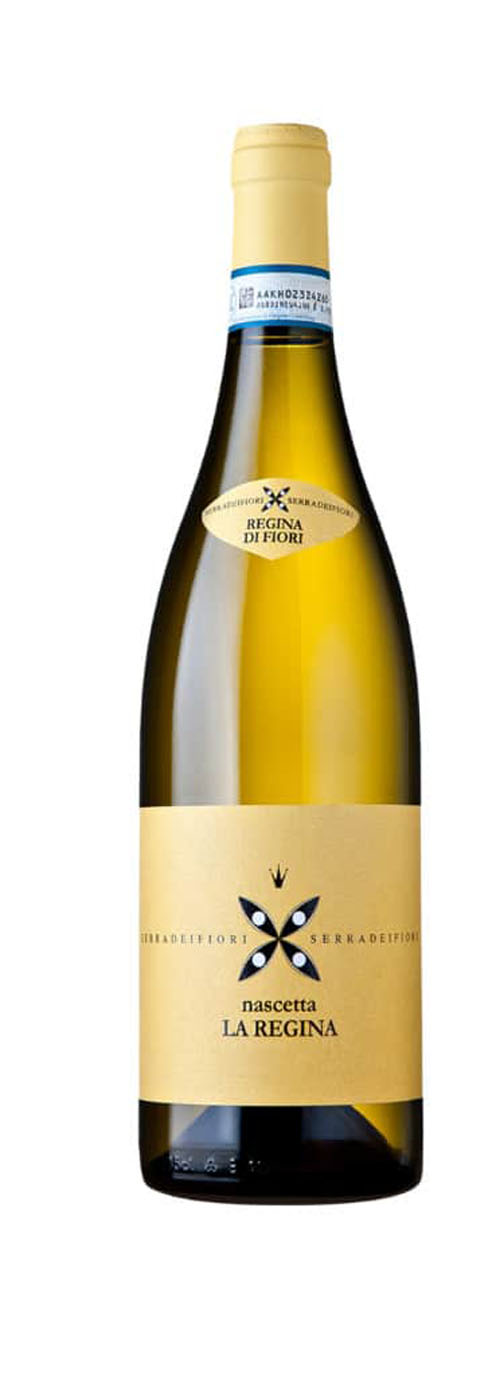
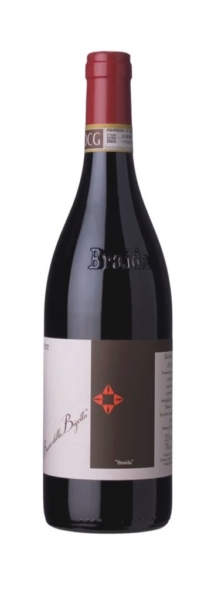
Nascetta 'La Regina' Serra dei Fiori 2021
Terrain:
Limestones rather rich in silt and clay and carbonates
Cellar
Giacomo Bologna's Braida winery is the story of Barbera, a great passion and dedication handed down over several generations to write an important history of Piedmontese oenology.
'Braida' was the nickname Giacomo's father, Giuseppe Bologna, a carter by profession, had earned while playing elastic ball, because of his resemblance to a champion of the sport. From his father Giacomo inherited, along with his nickname, a love of sport and horses and a large Barbera vineyard in the hills of Rocchetta.
The first harvest of wines from the Braida winery dates back to 1961, when Giacomo Bologna decided to bottle the lively Barbera del Monferrato 'La Monella'. In 1969, this wine was presented at the Douja d'Or national wine competition in Asti, winning the gold medal that allowed it to participate in various fairs free of charge.
At the beginning of 1982, Giacomo began experimenting with his innovative idea of pairing Barbera with barrique, a revolutionary idea. He transformed Barbera from an acidic, ready-to-drink wine into a unique, complex and long-lived wine by refining it, for the first time in the history of the grape variety, in French oak barriques. Thus were born the legendary wines such as Bricco dell'Uccellone and Bricco della Bigotta, which remain the symbols of the Braida winery to this day.
Today, Giacomo Bologna is considered by everyone as the father of Barbera, who made this Piedmontese vine known throughout the world.
Description
In dialect, the name of this wine is pronounced by separating the syllables: 'Nas-cëtta'. It is an ancient and indigenous vine variety of the Langhe and Cuneo area. Its rediscovery is recent and today only a few thousand bottles are produced. The wine fully expresses all the olfactory characteristics of Nascetta, a semi-aromatic grape that Braida decided to bet on starting in 1990, proving to be far-sighted in the cultivation of little commercialised vines. A wine often compared to the great white wines of the Rhine.
Organoleptic characteristics:
The colour to the eye is straw yellow
Aromas of citrus fruits, apple, pear, acacia flowers, fresh vegetables, exotic fruit, hay, straw and grapefruit, and beautiful mineral notes that fade to hydrocarbon sensations over time.
On the palate, it is distinctive, fresh and savoury, with citrus returns.
Storage time:
2-5 years
Vinification
White vinification, fermentation and maturation in steel.
Acknowledgements
2020 Wine Spectatorr 90/100
2019 Wine Enthusiast 91/100
2020 Bibenda