Features
Name:
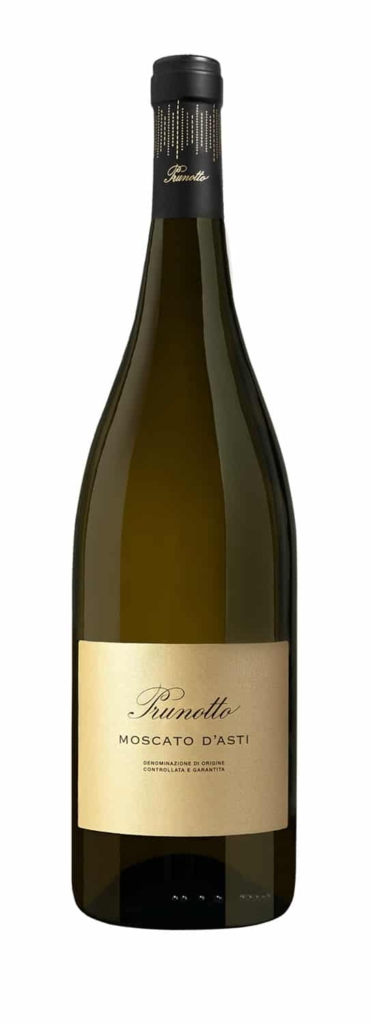
Moscato d'Asti DOCG 2022 Prunotto
Terrain:
marly layers with little sand. The soils have an important proportion of fine sediments, silt and clay.
Refinement:
Cellar
In 1904, in the presence of notary Giacomo Oddero and young witness Alfredo Prunotto, the Cantina Sociale 'Ai Vini delle Langhe' was founded in the council chamber of the municipality of Serralunga. Among the participants in the deed of incorporation were people who had left their mark on the history of Alba and the communes of the Langhe and many small local producers. In 1922, when the renewal of the Cantina Sociale expired, many members decided to stop conferring their grapes.
At this juncture, the young Alfredo Prunotto met and married Luigina, with whom he decided to take over the Cantina Sociale "Ai Vini delle Langhe", giving it his own name. The Cantina, thanks to the passion of the couple, soon became famous and began exporting Barolo and Barbaresco throughout the world. In 1956, Alfredo Prunotto decided to retire from business, handing over the winery to his friend Beppe Colla, assisted by Carlo Filiberti and later his brother Tino Colla.
Prunotto, in 1961, began to identify typical production areas particularly prized for the separate vinification of Cru wines, such as Barolo Bussia and Barbera d'Alba Pian Romualdo.
In 1972, Ugo della Piana, an architect of Langhe origin, designed the new winery, which was to be built near Alba where the company headquarters are still located today.
In 1989, the Antinori family began its collaboration with the Prunotto company, initially dealing with distribution and then, in 1994, with the retirement of the Colla brothers, also directly with production, maintaining the excellent level of quality strongly desired by Alfredo Prunotto.
The production philosophy, attentive to every detail, and the great passion for wine, immediately united Prunotto with the Antinori family who, in this area, met a new challenge, a new terroir where they could express the great territoriality of native and non-native vines.